What’s Up: The Turning Point: Real-World Stories Where an ECG Changed Everything – Case 6: The Silent Threat in the Pantry
Welcome back to our series, “The Turning Point,” where we spotlight real cases from your colleagues that demonstrate how an ECG can dramatically alter patient management. This edition tackles a common emergency where the ECG is a critical diagnostic and monitoring tool: toxin-induced arrhythmias.
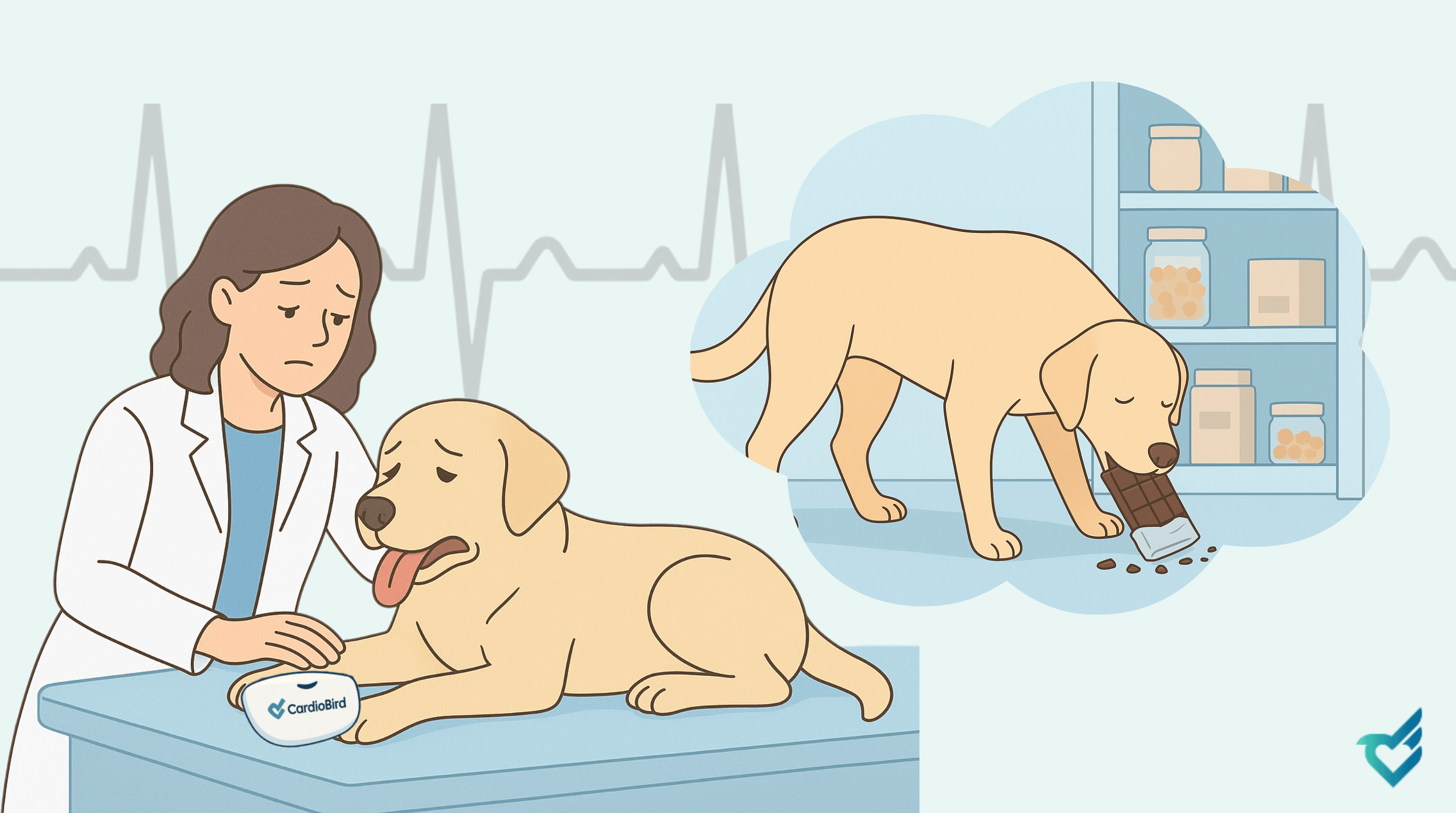
The Patient: A 4-year-old Labrador Retriever presented for suspected ingestion of a large quantity of dark chocolate.
The Presenting Signs: The dog was hyperactive and panting, with mild vomiting reported by the owner. While theobromine toxicity was suspected, the clinical signs were initially non-specific. The heart rate was elevated on auscultation, but the rhythm was difficult to assess definitively.
The Turning Point – The Toxic Exposure ECG: As part of the initial triage and decontamination, a CardioBird ECG was performed. The 30-second trace revealed a clear, diagnostic pattern: pronounced sinus tachycardia with frequent Supraventricular Premature Complexes (SVPCs). These findings were consistent with the sympathetic nervous system stimulation and myocardial irritability caused by chocolate toxins.
ECG Findings & Critical Difference:
The ECG provided objective, immediate evidence of systemic toxicity affecting the heart. It moved the diagnosis beyond suspicion to confirmation and established a critical baseline. The continuous monitoring capability of CardioBird allowed the team to track the progression of the arrhythmia in real-time as treatment with activated charcoal and IV fluids commenced. They could see the SVPCs decrease in frequency and the heart rate gradually normalize, providing direct feedback on the efficacy of their intervention and guiding the duration of hospitalization.
This “turning point” ECG shifted management from generalized supportive care to targeted cardiac monitoring. It prevented potential complications by identifying the arrhythmia early and ensured the patient was stable before discharge.
Your Takeaway:
This case underscores why an ECG is indispensable in managing toxin exposures, from chocolate to medications like digoxin:
- ECG is Your First Diagnostic Step: In any known or suspected toxin ingestion with cardiac effects, perform an ECG immediately. It provides a concrete, baseline assessment of cardiac electrical activity that auscultation alone cannot match.
- Pattern Recognition is Key: Learn the common ECG fingerprints of toxins. Chocolate and caffeine often cause sinus tachycardia and SVPCs. Digoxin toxicity is notorious for causing a range of arrhythmias, including atrial tachycardia with block, ventricular bigeminy, and severe bradycardia. The ECG pattern can often point to the culprit.
- Monitor the Entire Journey: An ECG is not a one-time screening test in toxicology cases. Use it also for continuous monitoring to track the resolution of arrhythmias with treatment and to catch any late-onset complications, ensuring the patient is truly stable for discharge.
By integrating rapid ECG assessment and monitoring into your toxicology protocol, you transform care from reactive to proactive. You are part of a global community using technology to see the invisible threats, guiding life-saving interventions with precision and confidence.
Have a “Turning Point” case of your own? We’d love to feature it. Share your story with us.